Will
12 min read - 01 October 24

25 ChatGPT Stats for 2026 (And What They Mean If You Sell Online)

Looking for the ChatGPT stats that actually affect your store? Here they are. ChatGPT now reaches around 900 million people every week, and a growing slice of that audience lands on product pages ready to buy.
The catch is that most of this traffic hides inside your direct channel in analytics, so it looks like it barely exists. Knowing the real numbers is where the fix starts. Below are 25 verified ChatGPT statistics for 2026, grouped and explained simply, with a quick read on what each set means for an ecommerce brand.


The Short Version

If you only remember five ChatGPT stats from 2026, make them these. The detail and the commercial read follow underneath.

  • Around 900 million weekly active users, and reportedly 1 billion monthly app users.
  • Roughly 2.5 billion messages are sent every day.
  • About 50 million shopping-related queries a day.
  • AI referral traffic to US retail grew 393% year on year in early 2026.
  • Around 82% of all AI referral traffic still comes from ChatGPT.


The ChatGPT Statistics for 2026 You Should Know First

The headline ChatGPT statistics for 2026 all point one way: this is a mainstream platform now, not a niche tool. Weekly users sit close to a billion, the app keeps breaking download records, and monthly website visits run into the billions. To put the scale in context, it helps to compare these numbers against the platforms that defined the previous era of search. Our breakdown of Google facts covers the numbers that show how rapidly that balance is shifting.

1. 900 million weekly active users. OpenAI announced this figure in February 2026, up from 800 million the previous October and double the 400 million of a year earlier. Few products in history have grown this fast.

2. 1 billion monthly active app users. By June 2026, Reuters reported the ChatGPT app had crossed a billion monthly users, reportedly the fastest app ever to reach that mark.

3. From 400 million to 900 million in about a year. Weekly users climbed through 400 million in February 2025, 700 million in July, and 800 million by October before reaching 900 million. The curve is still steep.

4. The most downloaded app of 2025. ChatGPT topped the global download charts with roughly 770 million installs, ahead of TikTok and Instagram.

5. Around 5.5 billion website visits a month. As of April 2026, chatgpt.com pulled in about 5.5 billion visits monthly, placing it among the ten most visited sites on the planet.

For an ecommerce brand, the takeaway is simple. The audience is already here at search engine scale, so the only question is whether your products show up when it answers.


ChatGPT Usage Statistics: How People Actually Use It

ChatGPT usage statistics show people treat it as a daily habit, and increasingly as a search engine. Most activity now happens outside of work, and nearly half of all sessions are people asking for advice or information. That last point matters more for your store than any raw user count.

6. 2.5 billion messages a day, globally. Users send roughly 2.5 billion messages to ChatGPT every day. That is a constant stream of questions, and plenty of them are buying questions.

7. About 330 million messages a day in the US. The US alone accounts for around 330 million daily messages, many of which involve products, brands and recommendations.

8. 73% of usage is non-work. OpenAI research found nearly three quarters of ChatGPT activity is personal rather than professional, covering everything from meal planning to gift ideas.

9. 49% of interactions are people asking for information. OpenAI groups usage into asking, doing, and expressing. Asking leads at about half of all sessions, which is exactly the behaviour that used to belong to Google. Getting your store in front of that asking behaviour is the core problem that generative engine optimisation is designed to solve.

When half of a billion user platforms are asking for recommendations, product discovery is quietly moving into the chat window. That is the shift worth planning for.

In the audits we run, this is the part founders underestimate most. They picture ChatGPT writing emails, not recommending a rival product instead of theirs to a customer who was ready to buy.


ChatGPT User and Demographic Statistics

ChatGPT demographic statistics for 2026 describe a user base that has gone fully mainstream. The platform skews towards younger adults, but the early gender gap has almost closed, and growth is now fastest outside the original US core. If you sell to a broad consumer audience, your customers are on it.

10. 25 to 34 is the largest age group. Adults aged 25 to 34 form the biggest single cohort at roughly 29% of users, with the wider 18 to 34 band making up the core of the base.

11. The gender split is now close to even. At launch, about 80% of users were male. By 2026, the split sits near 53% male and 47% female, and some analyses put women at over half.

12. India has passed 100 million weekly users. India is now ChatGPT’s second largest market, with more than 100 million weekly active users and fast year-on-year growth.

13. The US is still the biggest market by total users. The US leads on total users at around 200 million, a reminder that for most brands this is a domestic channel first.

A near-even, mainstream audience means ChatGPT recommendations now reach the same shoppers as your paid and organic campaigns target. This is no longer an early adopter niche.


ChatGPT Revenue and App Statistics

The ChatGPT revenue and app statistics explain why OpenAI keeps pushing into shopping. The money is real and growing fast, paid users reach well beyond the Plus tier, and the company is now valued like a tech giant. Commerce is the obvious next revenue line, which is why it reaches you.

14. Around $2 billion in revenue every month. OpenAI is generating roughly $2 billion monthly, an annualised run rate above $25 billion.

15. 50 million paying subscribers. Paid users now number about 50 million across all tiers, not only ChatGPT Plus, a figure many older stat sheets still underreport.

16. 9 million paying business users, and 92% of the Fortune 500. More than 9 million people pay for ChatGPT at work, and the vast majority of the largest US companies use it in some form. That business footprint is also why OpenAI is investing in paid placement options for brands. We cover the ecommerce angle in detail in our guide to ChatGPT ads.

17. An $852 billion valuation. After a record $122 billion funding round in March 2026, OpenAI was valued at $852 billion, among the most valuable private companies anywhere.

A company under this much pressure to monetise will keep building ways to sell inside the chat. Shopping is not a side project for OpenAI. It is part of the plan.


ChatGPT Market Share Statistics

ChatGPT market share tells a more nuanced story than the user numbers. It still leads every rival by a wide margin, yet its share is sliding as Gemini, Claude, and others grow. For your store, one market share stat outweighs all the rest: almost all AI referral traffic still comes from ChatGPT.

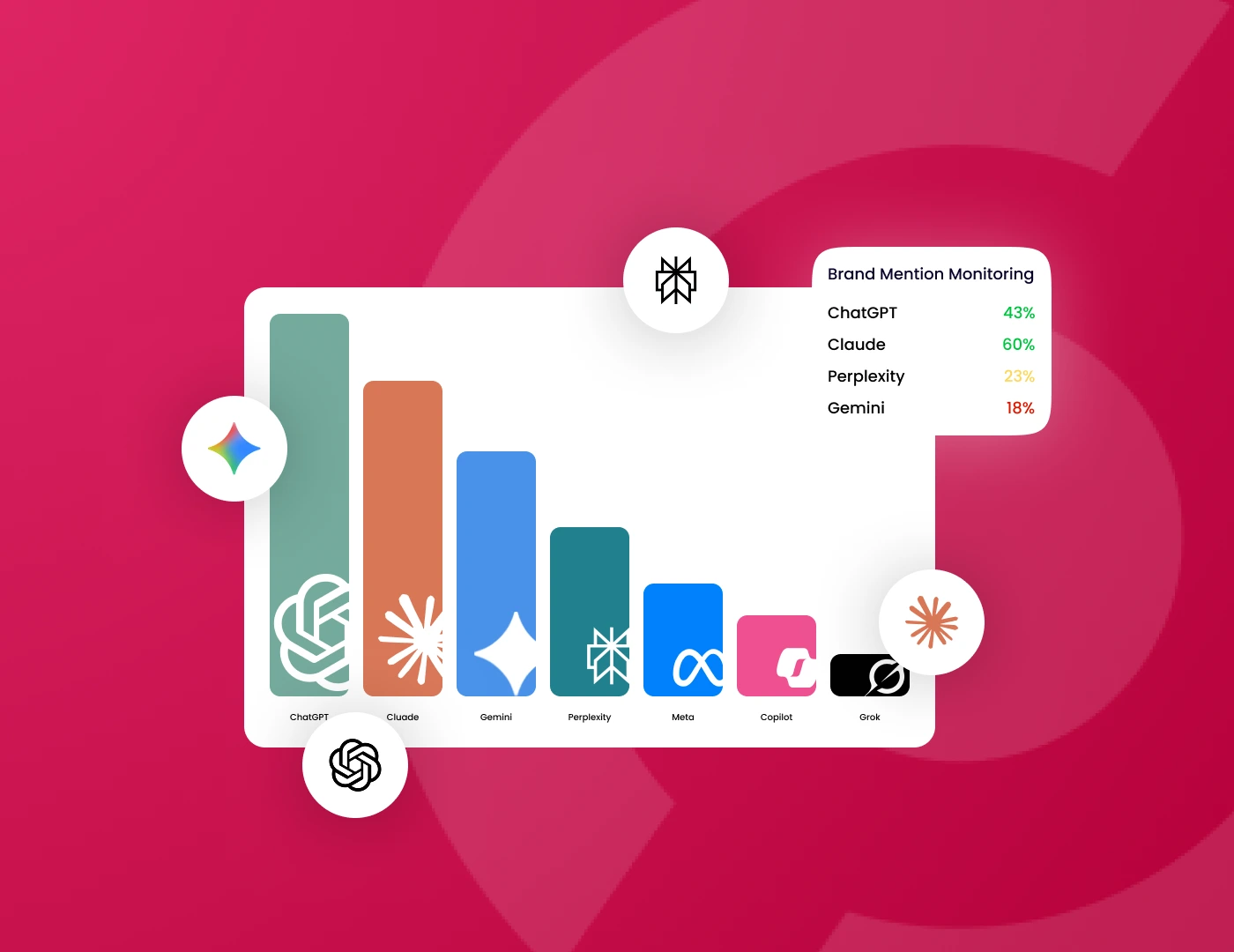
18. About 57% of generative AI web traffic. ChatGPT’s share of AI website traffic has fallen from over 77% a year ago to roughly 57%, as competitors gain ground.

19. US mobile app share has dropped below 40%. ChatGPT’s share of daily active users across US mobile apps slipped under 40% in early 2026 for the first time, down from nearly 70% a year before.

20. 82% of all AI referral traffic comes from ChatGPT. Despite the share losses, around 82% of the visits that AI platforms send to websites still start in ChatGPT. For now, optimising for AI search mostly means optimising for ChatGPT. Our practical guide on how to optimise for AI search engines covers the structural steps that get you found across all of them.

21. One in five AI users now use more than one tool. The market is fragmenting, with roughly 20% of users running several AI apps. Single platform dominance is fading.

ChatGPT is losing share but still owns the referral pipe. That is the gap to act in: get found here while it is the channel sending the most shoppers.


What ChatGPT Means for Ecommerce in 2026

Here is the part most ChatGPT stats roundups skip entirely. The platform is no longer only answering questions. It is sending shoppers to stores and, increasingly, letting them buy inside the chat. These are the numbers that should shape your next quarter, not just impress people at dinner.

22. Instant Checkout has been live since September 2025. Shoppers can buy from some stores without leaving ChatGPT. Etsy went first, with over a million Shopify merchants following, turning the chat into a storefront. We cover how this works and what it means for your setup in our full explainer on ChatGPT instant checkout.

23. Around 50 million shopping related queries a day. People ask ChatGPT what to buy roughly 50 million times daily. That is a buying audience the size of a major marketplace.

24. AI referral traffic to US retail grew 393% in a year. Adobe Analytics found AI-driven visits to US retail sites rose 393% year on year in early 2026, the fastest-growing source of store traffic it tracks.

25. AI traffic now converts 42% better than other sources. Adobe reported that shoppers arriving from AI went from converting 38% worse than average to 42% better in a single year, with revenue per visit running about 37% higher.

Two cautions keep this honest. A peer-reviewed study in Marketing Science, covering 973 stores and over $20 billion in revenue, found ChatGPT referrals still convert below most traditional channels. So treat this as a fast-rising channel, not a finished one, and treat early wins as a head start rather than a sure thing.

The second caution is where most stores lose money quietly. Paid ChatGPT sessions often pass no referrer data, so analytics files those visits under direct traffic. When we look at a brand’s reporting, AI referrals are routinely undercounted, sometimes several times over. You cannot manage a channel you cannot see.

There is also a structural opening worth knowing. Amazon currently blocks OpenAI’s shopping crawlers, so Amazon listings cannot appear in ChatGPT results. If you sell on your own Shopify store, your products can show up where Amazon’s cannot. That is a rare first mover advantage, and it favours brands that get their product data ready now.

The genuinely crazy ChatGPT stat is not 900 million users. It is that a discovery channel this large is already sending you buyers, and most stores can neither see it nor be found in it.


What These ChatGPT Stats Mean for Your Store

The big number everyone repeats is 900 million weekly users. The number that should hold your attention is the one you cannot see in your own dashboard.

AI search is already shaping what your customers buy, and the stores that get found and measured inside it compound an advantage every month the rest wait. Reading the stats is the easy part. Being the product ChatGPT recommends is the work, and our AI SEO for ecommerce service is where that work starts.


See Whether ChatGPT Can Find Your Store

If these numbers make you wonder whether your products show up when a shopper asks ChatGPT for a recommendation, that is exactly the question worth answering now. We help ecommerce brands get found and bought across AI search, from product data and site structure to the content these engines actually cite.

Searchflex is an AI-first search agency for ecommerce brands. We help DTC and Shopify stores get found and chosen across AI search and Google, from technical foundations to the content these engines cite.


Frequently Asked Questions

Is ChatGPT bigger than Google?

Not for search volume. Google still handles far more queries and traffic. ChatGPT is the largest AI platform, though, and it is taking a growing share of the product research that once went to Google.

How many people use ChatGPT every day?

OpenAI reports weekly rather than daily figures, but with about 900 million weekly users and 2.5 billion messages sent each day, daily active use runs comfortably into the hundreds of millions.

Can customers buy products directly inside ChatGPT?

Yes. Through Instant Checkout, shoppers can complete a purchase from participating stores without leaving the chat. Etsy launched first, with Shopify merchants rolling out across 2026.

Why is ChatGPT traffic missing from my analytics?

Paid ChatGPT sessions often send no referrer data, so tools like GA4 misfile these visits as direct traffic. As a result, most stores quietly undercount their AI referrals.

Which AI platform should ecommerce brands optimise for first?

ChatGPT, for now. It still sends roughly 82% of all AI referral traffic to websites, so getting found there covers most of the AI shopping audience today.

About the author

Will Padley-Lloyd

Will is an SEO specialist at Searchflex, helping our clients climb the rankings with a sprinkle of strategy and a cap of creative flair. Whether he’s tackling technical audits, crafting keyword-rich content, or geeking out over algorithm updates, Will’s passion for all things SEO shines through. He’s the guy who turns search engine mysteries into measurable results.

Most popular blogs

How to Optimise for AI Search Engines: The Ecommerce Guide to Getting Recommended, Not Just Ranked

25 ChatGPT Stats for 2026 (And What They Mean If You Sell Online)

Does YouTube Video Content Improve SEO?

AI Search ROI: How to Measure What Actually Matters

How to Check On-Page SEO on an Ecommerce Site

How to Conduct a Technical SEO Audit That Finds Revenue, Not Just Issues

What Is Technical SEO, and Why Does Getting It Wrong Cost Ecommerce Brands Revenue

Most Used AI Search Engines: Current Data From 2026

Best Shopify SEO Apps in 2026: What They Actually Do

Google Shopping Campaigns: Why Most Ecommerce Brands Are Optimising the Wrong Layer

What Are The Most Common Challenges of International SEO?

Ecommerce KPIs for the AI Search Era: What to Track in 2026