Will
12 min read - 01 October 24

What Is Technical SEO, and Why Does Getting It Wrong Cost Ecommerce Brands Revenue

What is technical SEO? It is the work that makes sure search engines can crawl, index, and render your store the way you intend, so the rest of your search investment actually counts.
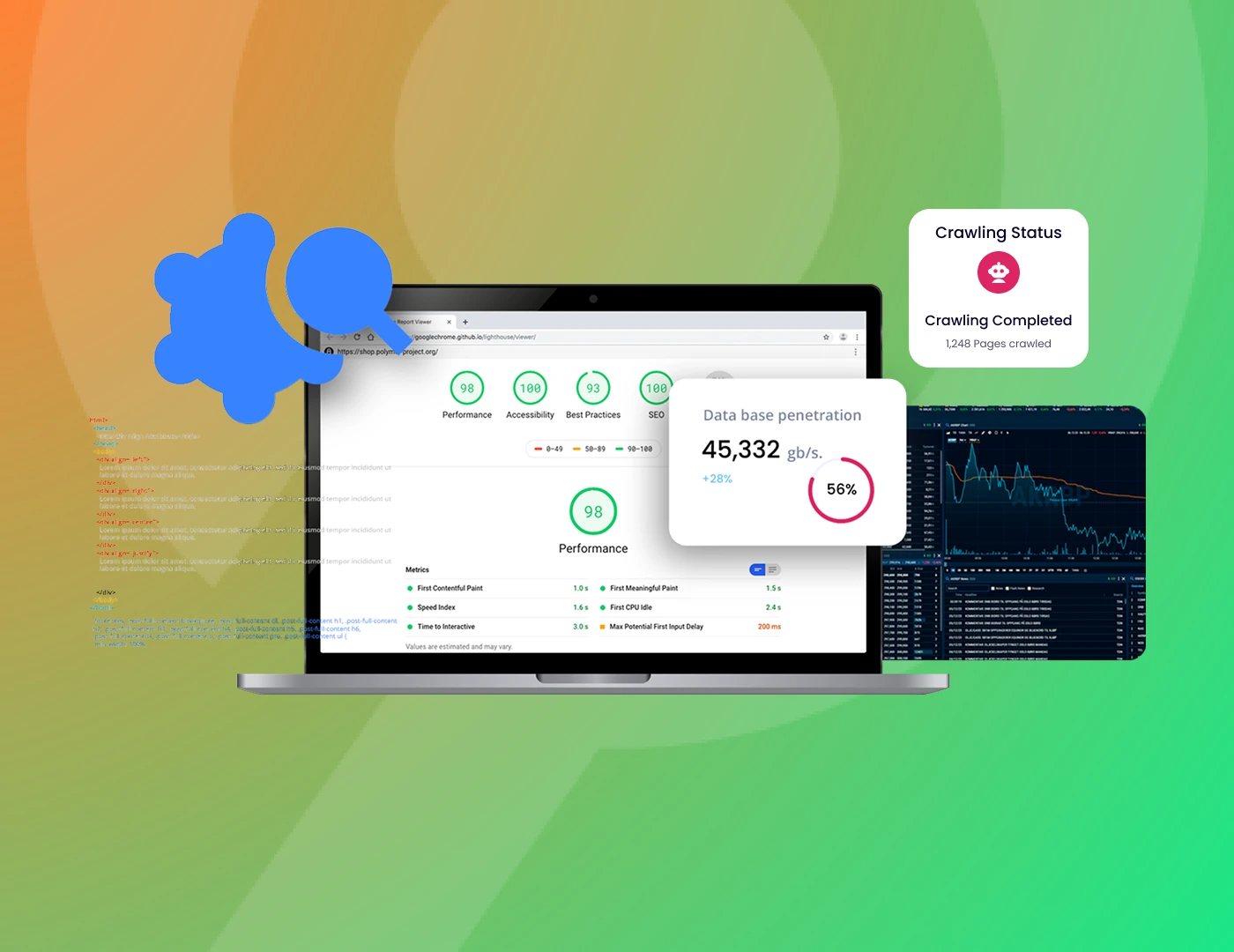
The problem we see is that most brands assume this layer is handled, while underneath it quietly leaks revenue. The fix is to treat it as infrastructure, not a one-off checklist. In this post, we cover what technical SEO is, why it matters commercially for ecommerce, the foundation search engines need, the issues we find most, and how to audit yours.


What Is Technical SEO?

Technical SEO refers to the configuration and structure of a website that controls how search engines access, crawl, index, and rank its pages. It is the layer beneath your content and your links. While on-page SEO covers what is on the page, and off-page SEO covers your authority, technical SEO governs whether search engines can reach and understand the page in the first place.

Think of it as the foundation your whole search system sits on. You can publish excellent product copy and earn strong links, but if a crawler cannot reach the page, or indexes the wrong version of it, that effort does not compound. The technical layer decides whether everything above it works.

Here is what falls under the technical umbrella for an ecommerce store:

  • Crawl access: how search engine crawlers reach your pages, and what you let them spend time on.
  • Indexation: which pages get added to the search index, and which get excluded.
  • Site architecture and URL structure: how pages connect and how deep they sit from the homepage.
  • Page speed and Core Web Vitals: how fast and stable pages feel to real users.
  • Mobile usability: since Google evaluates the mobile version of your site first.
  • HTTPS and security: encrypted connections across every page.
  • Structured data: machine-readable labels that help engines understand your content.
  • Canonicalisation: telling Google which version of a duplicated URL you prefer.
  • XML sitemaps and robots.txt: the files that guide discovery and crawl behaviour.

You do not need to implement all of these yourself. You do need to know whether they are working, because a gap in any one of them can hold back the others.


Why Technical SEO Is Important for Ecommerce

Technical SEO is important because search engines can only rank pages they can find, read, and trust. If a crawler cannot access a page, cannot decide which version to index, or stalls on slow rendering, the page never competes on merit. For ecommerce brands, the stakes are higher because the catalogues are large and the URL patterns are complex.

A content site has a few hundred URLs. An ecommerce store can generate tens of thousands without trying, once you add collections, filters, sorting options, and product variants. That scale is where small technical gaps turn into real revenue leaks.

In the brands we audit, the recurring ecommerce challenges look like this:

  • Faceted navigation: filters and sort orders multiply your URL count far beyond your actual product count, much of it thin and near-duplicate.
  • Product variants: the same item across multiple collections creates several URLs for one product, which confuses canonical signals.
  • Out-of-stock churn: products that drop out and return send mixed signals about which pages are stable and worth crawling.
  • Catalogue scale: with thousands of pages, crawlers spend their time unevenly, and priority pages can get visited less often than they should.
  • Heavy pages: media-rich product and category templates load slowly, which hurts both rankings and conversion at once.

None of these are exotic. They are the default behaviour of most ecommerce platforms. That is exactly why they go unnoticed: the store works for shoppers, so nobody looks underneath.


The Technical SEO Foundation: What Search Engines Need

A strong technical SEO foundation rests on four stages: crawling, indexing, ranking signals, and structured data. Each one feeds the next, so a failure early in the chain quietly caps everything after it. Here is how each stage works and where ecommerce stores tend to slip.

Crawling

Crawlers discover pages by following links and reading your robots.txt file, which tells them where they may and may not go. When robots.txt is configured loosely, crawlers waste time on low-value URLs like filter combinations and internal search results. When it is configured too tightly, they get blocked from pages you actually want indexed. Both happen more often than you would expect.

Indexing

Being crawled does not guarantee being indexed. After crawling, Google decides whether each page is worth keeping, and it drops pages it sees as duplicates, thin, or blocked by a noindex tag. This is where the canonical tag matters: it signals which version of a URL you prefer. Worth knowing, though, that Google treats canonical tags as hints, not directives, so it can and does override them when other signals disagree.

Ranking Signals

Once a page is indexed, technical quality feeds into how it ranks. Core Web Vitals are part of this. They measure loading (Largest Contentful Paint), responsiveness (Interaction to Next Paint, which replaced First Input Delay in March 2024), and visual stability (Cumulative Layout Shift). Google confirms these are used by its ranking systems, though they act as a supporting signal, a tiebreaker between similar pages, rather than a primary driver. HTTPS works the same way: a confirmed but lightweight signal.

Structured Data

Structured data, or schema markup, labels your content so search engines understand what each element is. For ecommerce, product schema can make a page eligible for rich results showing price, availability, and ratings. One nuance worth holding onto: product structured data is not a ranking factor. It does not lift your position. It makes you eligible for richer listings, which can improve click-through rate. That is a different lever, and a valuable one.


Common Technical SEO Issues We See in Ecommerce Audits

The most common technical SEO issues are not dramatic outages. There are quite a few structural gaps that accumulate over months. These are the five patterns we run into most when we look under the hood of an ecommerce store.

Crawl Budget Wasted on Faceted Navigation

Filters and sort orders generate enormous numbers of URLs. A catalogue of a couple of thousand products across a dozen filter options can produce hundreds of thousands of crawlable URLs, most of them thin. Google’s own crawl budget guidance formally targets very large sites, those past a million pages, but the waste mechanic shows up well below that threshold. Crawlers spend time on filter permutations while your priority category and product pages get visited less often.

Canonical Confusion at Scale

Products live in several collections, so one item ends up with several URLs. In theory, the canonical tags resolve this. In practice, when the preferred URL is poorly linked internally and other signals point elsewhere, Google ignores the tag and picks its own version. You can end up ranking a weaker URL than the one you optimised.

Pages Indexed that You Never Intended

Internal search results, sort variations, tag pages, and account URLs show up as indexed when you open the coverage report. Nobody chose to index them. They crept in through default settings and accumulated quietly, diluting how Google understands your site.

Core Web Vitals that Pass in the Lab But Fail in the Field

A lab test in PageSpeed Insights can show a healthy score while real-user field data tells a worse story. The usual culprits are third-party scripts loading at render-blocking positions, lazy loading misapplied to above-the-fold images, and layout shifts from content injected after load. Since the scores that count come from real users, the lab number can lull you into thinking you are fine.

HTTPS Done Incompletely

The site loads on HTTPS, so it looks secure. But legacy HTTP URLs still resolve, some pages serve mixed content, or the HTTP-to-HTTPS redirects are inconsistent. The security signal is real, yet a half-finished migration can undercut it on the exact pages you care about most.


Technical SEO Best Practices: What to Prioritise

Good technical SEO best practices are about sequence, not volume. You do not need to fix everything at once. You need to fix the things that everything else depends on, in the right order.

Here is how we prioritise.

  1. Get crawl access right first. If the wrong pages are being crawled, everything built on top is compromised. Review robots.txt and your crawl coverage before anything else.
  2. Confirm your most valuable pages are indexed. Cross-check your top category and product pages against what Google actually has in its index. The gap between the two is often the first revenue finding.
  3. Resolve duplicate content at the structural level. Canonicalisation is an ongoing architectural decision, not a one-time tag. On Shopify, the platform sets canonicals automatically, and those defaults do not always match your commercial priorities.
  4. Treat Core Web Vitals as a threshold, not a trophy. Get above the passing line, then stop. Chasing a perfect score once you are already passing is diminishing returns.
  5. Audit before you invest more in content or links. Building more on top of a broken foundation does not compound. It dilutes. Diagnosis comes first.

If you only do one thing from this list, make it the second one. The number of brands surprised by what is missing from their own index is the most reliable pattern we see.


How to Audit Your Technical SEO Foundation

A technical SEO audit is not about running one tool and reading a score. It is about checking whether search engines can reach, understand, and prioritise the pages that make you money. You can get a clear picture using four sources that most teams already have access to.

  • Google Search Console: your crawl coverage, index status, and real-user Core Web Vitals data, straight from Google.
  • PageSpeed Insights: lab and field data for your Core Web Vitals, so you can see the gap between the two.
  • Screaming Frog: a crawl simulation that surfaces redirect chains, broken links, canonical mismatches, and orphaned pages at scale.
  • Your XML Sitemap: confirm it lists only indexable pages and is submitted to Search Console, so it guides discovery instead of muddying it.

A proper audit surfaces a specific set of findings: pages indexed that should not be, pages missing that should be there, crawl budget waste, redirect chains adding latency, canonical mismatches, and field-data Core Web Vitals failures.

Here is the part most audits skip. Naming a problem is not the same as quantifying it. Plenty of brands have had an agency run a technical scan and hand over a list of red flags. Few of them ever saw a number attached to each finding, an estimate of what that issue is costing in revenue. Without that, you cannot tell which fix matters and which is noise. The diagnosis only becomes useful when it tells you what each gap is worth.


Final Thought

Technical SEO is not a project you finish. It is a condition you maintain. For ecommerce brands, the foundation degrades quietly: new products, new filters, new scripts, a migration here, a theme update there. The structural picture at month twelve looks nothing like month one, and the leaks rarely announce themselves.

Brands that treat the technical layer as a one-time setup, then pour budget into content and links, are optimising the surface while the foundation underneath keeps leaking. The order matters. The audit comes first, and everything else compounds on what it finds.


Find Out What Your Technical Foundation Is Costing You

If your organic performance has plateaued despite steady investment in content and campaigns, the cause is almost always structural rather than creative. The Searchflex Search Leak Audit diagnoses your technical SEO foundation, names the specific failure patterns, quantifies the revenue impact of each one, and hands you a prioritised roadmap to fix them in the right order.

Searchflex is a search infrastructure consultancy specialising in ecommerce brands. We diagnose structural search failures and quantify their revenue impact.


Frequently Asked Questions

Is technical SEO a one-time job or ongoing?

It is ongoing. Every new product, filter, script, or migration can introduce a fresh gap, so the foundation needs periodic checks rather than a single setup.

Can I do technical SEO myself, or do I need a developer?

You can diagnose most of it with Search Console and a crawler. Implementing fixes like redirects or canonical rules usually needs a developer or platform-level access.

How long does it take to see results from technical fixes?

It varies. Some indexing fixes show within days, while crawl and ranking changes can take weeks as search engines re-evaluate your pages and rebuild their picture of your site.

Does technical SEO matter if my store is small?

Yes, though less than at scale. Even small stores lose pages to canonical errors or no-index mistakes, and those gaps quietly cap the traffic you could be earning.

Which technical SEO issue should I check first?

Start with your index coverage. Confirm your most important category and product pages are actually indexed, because nothing else matters if your key pages are missing.

About the author

Will Padley-Lloyd

Will is an SEO specialist at Searchflex, helping our clients climb the rankings with a sprinkle of strategy and a cap of creative flair. Whether he’s tackling technical audits, crafting keyword-rich content, or geeking out over algorithm updates, Will’s passion for all things SEO shines through. He’s the guy who turns search engine mysteries into measurable results.

Most popular blogs

What Is Technical SEO, and Why Does Getting It Wrong Cost Ecommerce Brands Revenue

Most Used AI Search Engines: Current Data From 2026

Best Shopify SEO Apps in 2026: What They Actually Do

Google Shopping Campaigns: Why Most Ecommerce Brands Are Optimising the Wrong Layer

What Are The Most Common Challenges of International SEO?

Ecommerce KPIs for the AI Search Era: What to Track in 2026

Generative Engine Optimisation for Ecommerce: What You Need to Know

The December 2025 Ecommerce Reset: Why Most Brands Are Still Misdiagnosing What Happened

AI Search Won’t Save Weak Ecommerce Infrastructure

Shopify Agentic Storefronts: The Infrastructure Checklist Before You Toggle It On

The March 2026 Google Core Update: What Actually Changed For Ecommerce Brands

E-E-A-T In Ecommerce Guide: What You Need To Know