How to Check On-Page SEO on an Ecommerce Site
To check on-page SEO on an ecommerce site, you check the templates that build your pages, not each page on its own.

 SEO
SEO
 Packages
 Google Ads
 Company
 Sectors
 Site Performance
 Locations
To check on-page SEO on an ecommerce site, you check the templates that build your pages, not each page on its own.
Most guides tell you to drop one URL into a tool and read the score. That works for a small site, but it falls apart when you run thousands of products built from the same few templates. So we will show you a faster, more accurate way: how to run the check across your whole catalogue, which on-page elements actually matter, and how to turn what you find into a short, prioritised fix list.
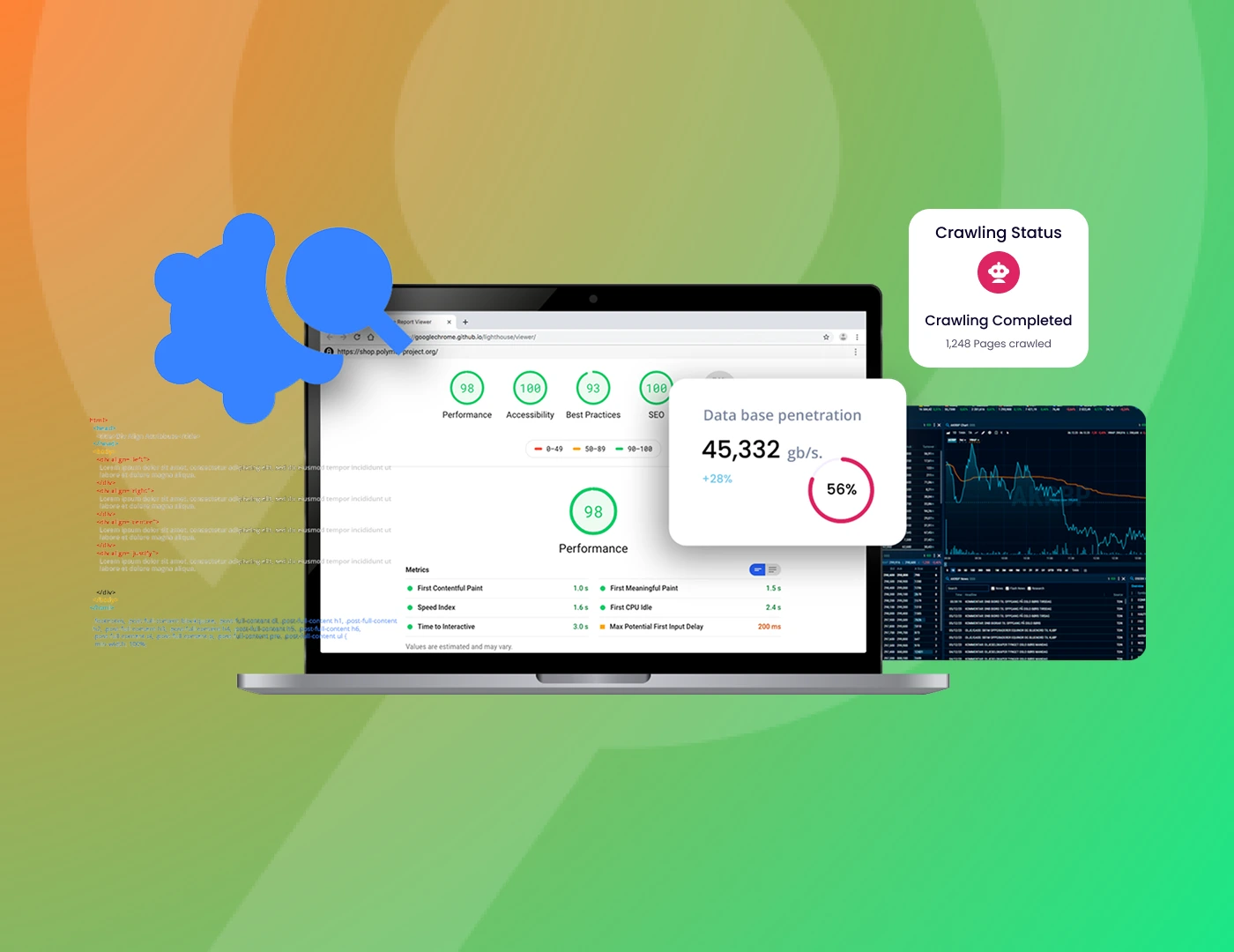
The quickest way to check on-page SEO across a large catalogue is to crawl the whole site, group the URLs by template, then look for patterns instead of scoring single pages. Your product pages, collection pages, and blog posts each come from their own template, so a problem usually repeats across a whole group at once. Find the pattern, and you fix thousands of pages in one change.
In the audits we run, the biggest wins almost always come from one template fix, not a hundred separate page edits. So once your sheet is grouped by template, you already know where to spend your time.
A single page score won’t tell you what’s wrong, because your store builds its on-page elements from templates and dynamic fields, not by hand. One product page passing a check says nothing about the thousands of pages built from the same rule. Worse, a green score points you at that one page, when the real fix lives in the template behind it.
Say you sell 4,000 products. Your developer set up one product template that fills the title, H1, and meta logic for every item. If that template repeats the brand name in every title or leaves the H1 blank, the issue shows up 4,000 times. A check on one page can look fine while the pattern quietly drags down a whole section.
So the question is never just is this page optimised. It is whether this template produces good on-page SEO every single time it runs.
The on-page SEO elements that matter most on an ecommerce SEO site are the ones your templates control at scale: title tags, meta descriptions, headings, and product structured data. Each one repeats across your catalogue, so each one is worth checking by template. If you want a refresher first, start with our primer on on-page SEO basics. Here is what to look for, and why it pays off.
Google often rewrites the title it shows in results, but it still reads your HTML title to understand the page, so your titles still matter. Check that your product template builds a unique, descriptive title for each item, usually the product name plus a useful detail, rather than the brand name stamped on everything. Keep the important words near the front.
Google rewrites most meta descriptions and does not use them to rank pages, so do not spend hours hand-writing every one. What they do is win the click. Make sure your template writes a unique, readable description per page, and never leaves the same one duplicated across the catalogue.
Headings help shoppers and Google understand the page. The order, H1 then H2, is about clarity and accessibility, not a ranking lever, and more than one H1 will not hurt you. Check that every product and collection template outputs one clear H1 that names the page, then logical H2s for sections like specs, reviews, and shipping.
Product schema with the required fields, name, image, price, and availability, makes your pages eligible for rich results like price and ratings in search. Because it is template-generated, one broken field can flag thousands of pages at once. So, validate a sample with Google’s Rich Results Test, then watch the Merchant listings report in Search Console. The same care applies to your wider product page setup.
On-page checks fall short if you ignore the technical layer that decides whether your pages get seen at all. Two things matter most at the template level: what gets indexed, and how fast the page loads. Both repeat across your catalogue, so both deserve a template-level check.
Faceted filters and sort options can spin up thousands of near-duplicate URLs, which is where catalogues quietly bloat. A canonical tag is a hint, not an order, so Google can still pick a different page. And blocking a URL in robots.txt stops crawling, not indexing, so a blocked page can still show up in search. To keep pages like internal search results out of Google, let it crawl them and use a no-index tag. We dig into this in our guide to ecommerce technical SEO issues.
Core Web Vitals measure loading, responsiveness, and visual stability, and they act as a supporting signal, a tie-breaker when two pages are close. They run on real-user data, so check the field data in Search Console, not just a lab score. Because one heavy template script slows every page of that type, this is a template problem too. Aim for LCP under 2.5 seconds, INP under 200 milliseconds, and CLS under 0.1.
Once your on-page SEO audit is done, turn it into a short, prioritised fix list rather than a giant spreadsheet nobody acts on. Fix the template that touches the most revenue-driving pages first, not the page with the worst score. That way, one change lifts a whole section at once. Work in this order:
We usually find that two or three template fixes account for most of the gain. The long tail of tiny page-level tweaks can wait.
On-page SEO on an ecommerce SEO site is a property of your templates, not your pages. A green score on one product page is not proof your store is healthy. It just means one page passed.
Check the systems that build your pages, fix the patterns that repeat, and you move thousands of URLs with a handful of changes. That is the difference between busywork and real progress.
If your store runs on thousands of template-built pages, a page-by-page check will never give you the full picture. Our AI SEO services audit your on-page SEO across every template, find the patterns that repeat, and turn them into a prioritised plan that moves rankings and revenue.
See how our AI SEO services work.
Searchflex is an ecommerce search performance agency. We help scaling DTC brands grow their visibility across Google and AI search, from technical foundations to product and content.
How often should I check on-page SEO?
Run a full template-level check each quarter, plus a quick one after any theme update, template change, or migration. Those are the moments new on-page issues tend to appear across your whole catalogue.
Can I check on-page SEO for free?
Yes. A crawler’s free tier plus Google Search Console covers most of it. The catch is scale, since free tools cap crawl size, so very large catalogues may need a paid crawl.
Do I need a developer to fix on-page SEO issues?
Often yes. Most fixes live in your templates and theme files, so template-level changes usually need developer or theme access. Small text edits on individual pages you can handle yourself.
How long until on-page SEO fixes show up in Google?
Once Google recrawls the pages, on-page fixes can show within a few weeks. Competitive pages take longer, and template fixes tend to spread faster because Google re-evaluates many pages at once.
Should I check on-page SEO on mobile or desktop?
Check both, but lead with mobile. Google indexes the mobile version of your pages first, so a mobile issue in a template affects how your whole catalogue is understood.