Free Consultation
Will
12 min read - 01 October 24

17 Fashion SEO Tips For 2026

Ecommerce SEO remains one of the highest-ROI growth channels for fashion brands in 2026 – but as conversational search behaviour evolves, it now extends far beyond traditional blue-link rankings.

As Google and AI-powered search experiences increasingly surface answers, recommendations, and visual results directly in the SERP, fashion brands must optimise for real expertise, strong user signals, and content that performs across both classic and AI-driven discovery.

This guide outlines Google and AI-aligned fashion SEO best practices for 2026, designed specifically for fashion ecommerce brands navigating rapid trend cycles and evolving search behaviour.


Fashion Ecommerce SEO in 2026: What Actually Matters


1. Every Page Must Speak to One Clear Intent

Google no longer ranks pages by keyword count – it judges whether a page answers the user’s quest.

Principle: One intent per page.

  • Transactional pages – “women’s winter coats” should sell
  • Informational pages – “how to style oversize blazers” should teach
  • Never mix buying intent with information in the same URL
  • Use headings, internal links, and copy that reinforce that single purpose

Why this matters: Fashion search is inherently seasonal and intent‑rich – get this wrong and rankings, engagement, and conversions all suffer.


2. Category & Collection Pages Are Your Organic Revenue Engines

These aren’t product lists – they are conversion gateways.

  • Craft precise, user‑centered H1s – “Men’s T-Shirts & Tops”
  • Use logical heading structures that reflect shopper thinking
  • Add category descriptions and helpful accordion content below your products
  • Keep URLs clean and controls consistent
  • Provide clear navigation to relevant collections

Expert insight: Google expects context and value here. A bland SKU list no longer cuts it.
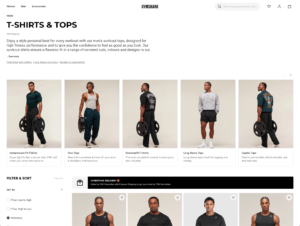
screenshot of gymshark collection page


3. Internal Linking Is a Strategic Asset

Fashion sites are deep and constantly shifting. Internal links are how authority flows.

  • Link editorial pages to key categories and seasonal launches
  • From category pages, link to subcategories and featured products
  • Use natural, descriptive anchor text.
  • Update links with product cycles.

Result: Faster indexing, stronger rankings on commercial pages, and higher organic revenue.


4. Original Descriptions Convert Better & Rank Better

Generic or brand‑supplied seo content is invisible to Google and unhelpful to users.

  • Fit, sizing, and feel
  • Materials and craftsmanship
  • How it styles – and for what occasions
  • Embed helpful FAQs on product pages

Outcome: Stronger trust signals (E‑E‑A‑T) and better conversions.


5. Use Clear Page Signals Through Structured Data & Headings

Google and AI systems read the on-page SEO structure before the copy. Essentials:

  • Product schema (price, stock, reviews)
  • Breadcrumb and collection schema
  • FAQ markup where it adds value
  • Headings: One H1, then logical H2s/H3s that reflect user questions.

Impact: Better SERP presence, rich results eligibility, and higher click‑through rates.


6. Image SEO Is a Primary Discovery Channel

Fashion is visual – and image search is growing.

  • Use descriptive filenames and alt text
  • Compress for speed (WebP/AVIF)

Why it matters: Image search drives real discovery in both Google and AI.


7. Publish Content That Shows Real Fashion Expertise

Generic AI content is now the baseline – human insight is the differentiator. Focus on:

  • Styling guides and outfit builds
  • Seasonal trend analysis with expert commentary
  • Lookbooks with real people, real stories
  • Brand vision and origins

Note: Shallow or AI‑generated content that adds no real value hurts more than it helps.


8. Mobile Experiences Drive Rankings and Revenue

Most browsing and purchases are on mobile.

  • Prioritise performance (Core Web Vitals)
  • Simplify navigation and filtering
  • Deliver rich images without lag

Note: Poor mobile UX kills search visibility, engagement and sales.


9. Authority Comes From Real Links

“Earned” ecommerce backlinks from reputable fashion sites still matter.

  • Pitch seasonal pieces to editors with real data or trends
  • Collaborate with stylists and creators who have domain credibility
  • Promote campaigns with genuine news value

Effect: Elevated authority for your high‑value pages.


10. Pagination & Canonicals Must Be Precise

Large inventories require technical seo for ecommerce clarity.

  • Ensure paginated category URLs are indexable
  • Use correct, self‑referencing canonicals
  • Don’t canonicalise filtered/seasonal pages unless necessary

Outcome: You avoid lost indexing and diluted relevance by sending clear signals throughout the products in your catalogue.


11. Breadcrumbs Should Always Reflect True Structure

Breadcrumbs improve usability and site clarity for search engines.

  • Use schema
  • Mirror your hierarchy faithfully

Impact: Clear breadcrumbs across mobile and desktop strengthen internal linking, improve crawlability, and help Google understand category relationships.


12. Use the Footer Strategically

The footer is a prime internal linking space if used intentionally.

  • Link to key categories & collections
  • Use user‑focused text – not keyword lists
  • Cluttered footers dilute value.

Why this matters: For fashion brands, a clean, purposeful footer reinforces site architecture and passes authority through to your products.


13. Protect SEO Value Through Smart Product Lifecycle Management

Deleting SKUs without redirects wastes authority and disrupts the flow of your ecommerce SEO.

  • Redirect discontinued products to the nearest equivalent
  • If none exists, send authority to the parent category
  • Preserve seasonal URLs for recurring use

Outcome: You retain accumulated rankings, backlinks, and relevance instead of losing momentum from season to season.


14. Fix Broken Backlinks and Redirects Promptly

Lost ecommerce backlinks = lost ranking power.

  • Audit backlinks to 404s
  • Redirect them to relevant live pages
  • Eliminate redirect chains and update internal links

Effect: You recover lost authority, stabilise rankings, and improve crawl efficiency.


15. Be Intentional About Seasonal & Trend SEO

Timing beats tactics.

  • Refresh existing pages rather than make duplicates
  • Optimise collections well before peak demand
  • Update copy, imagery, and links as trends shift
  • Use first‑party data and search demand signals to guide timing.
  • Launch supporting blog content for new drops in advance

Why this matters: Search engines reward preparedness – late optimisation means missing the revenue window entirely.


16. Local SEO Matters for Physical Stores

If you have retail locations:

  • Keep local listings optimised
  • Create well‑structured store location pages
  • Ensure consistent Name/Address/Phone details
  • Manage reviews actively

Impact: Strong local signals drive foot traffic, improve map visibility, and connect online discovery to in-store revenue.


17. International SEO Is About Search Behaviour, Not Translation

International SEO for fashion brands in 2026 is more than translating existing pages. Effective international SEO requires:

  • Market-specific keyword and category research
  • Localised content depth and structure, not one-to-one page duplication
  • Correct technical implementation (hreflang, indexing control, internal linking)
  • Alignment with local SERP features, imagery, and brand signals

Impact: Fashion brands that treat international SEO as a structural and strategic exercise – rather than a translation task – are far better positioned to earn visibility and trust across global search and AI-driven discovery.


Turning Fashion SEO Insight into Execution.

In 2026, fashion SEO isn’t about hacks – it’s about clarity, experience, and expertise.

Every page should exist for a reason. Every structure should reflect real user behaviour. And every optimisation should serve people first – because that’s what modern search systems reward.

If you want support translating these principles into a search system that actually performs, we help fashion ecommerce teams identify gaps, prioritise impact, and execute with confidence.
Talk to a specialist

About the author

Will Padley-Lloyd

Will is an SEO specialist at Searchflex, helping our clients climb the rankings with a sprinkle of strategy and a cap of creative flair. Whether he’s tackling technical audits, crafting keyword-rich content, or geeking out over algorithm updates, Will’s passion for all things SEO shines through. He’s the guy who turns search engine mysteries into measurable results.

Most popular blogs

17 Fashion SEO Tips For 2026

What ChatGPT Ads Mean for Ecommerce Brands

Searchflex Partners With Iced London

Partnering with Jacuzzi to Inspire Outdoor Living

Google AI Mode Launches in Australia

We’re Proud to Partner with Varley

New ChatGPT Shopping Tool with Instant Checkout

Why Local SEO Is Important for Small Businesses

The Complete Guide to Topical Authority in SEO

A Simple Guide to Local SEO: Growing in AI-Driven Search

What Is Ecommerce SEO? A Complete Guide

The Guide to AI SEO for Ecommerce: Optimising for LLMs