Will
12 min read - 01 October 24

E-E-A-T In Ecommerce Guide: What You Need To Know

Google’s recent core updates changed how ecommerce brands compete in organic search. For years, many stores ranked product and collection pages primarily through technical SEO, internal linking, and on-page SEO. That still matters – but it is no longer enough in competitive categories.
Today, Google increasingly evaluates whether a brand appears genuinely credible, experienced, and trustworthy before rewarding it with visibility for commercial queries.

That is where E-E-A-T comes in.

And for ecommerce brands, E-E-A-T is no longer just an editorial content concept.

It is now a commercial ranking framework.

The stores gaining visibility in 2026 are not necessarily the ones publishing the most content. They are the ones creating the highest level of purchase confidence.

That means:

  • Demonstrating genuine product experience
  • Building category-level expertise
  • Reducing customer uncertainty
  • Reinforcing trust at every stage of the buying journey
  • Creating a brand that Google can confidently associate with a category

In practice, Google is increasingly ranking brands – not just pages.

This guide breaks down how E-E-A-T now applies across product pages, collection pages, editorial content, and sitewide ecommerce architecture.


How E-E-A-T Evolved in Ecommerce

To understand why ecommerce stores are affected now, it helps to understand how the framework developed.

Pre-2022: Google used E-A-T (Expertise, Authoritativeness, Trustworthiness) as a quality evaluation framework, applied heavily to YMYL content: health, finance, and legal sites.

Late 2022: Google added the first “E” for Experience, creating E-E-A-T. First-hand, real-world experience with a product or topic became an explicit quality signal. Thin product reviews and affiliate content with no genuine experience began to underperform.

2023 to 2024: A series of product review updates and helpful content updates signalled that Google was extending its quality framework well beyond YMYL. Generic category pages and low-effort product descriptions started losing ground to stores with richer, more authoritative content.

December 2025: Google’s core update significantly strengthened E-E-A-T evaluation across competitive ecommerce categories. Brands relying on category and product pages without strong experience, expertise, authority, or trust signals saw measurable drops in non-branded organic traffic. Websites with strong E-E-A-T signals saw an average of 23% more organic traffic following this update.


Why E-E-A-T Matters For Ecommerce Brands

E-E-A-T is not a content style guide. It is how Google evaluates whether your store deserves to rank for the commercial queries your customers are using every day.

Google has been increasingly rewarding ecommerce brands that demonstrate six specific signals across their sites:

  • Real product testing and first-hand usage content on product and collection pages.
  • Original photography and video that demonstrates genuine product knowledge.
  • Trustworthy business signals include clear policies, contact information, and returns processes.
  • Accurate and transparent product information that reduces purchase risk.
  • Author and brand expertise demonstrated through content depth and attribution.
  • Strong customer reputation evidenced through verified reviews and external mentions.

93% of buyers check reviews before purchasing. 70% of shoppers actively look for trust signals before buying. Products with reviews see a 32% average conversion lift on product pages.

These are not metrics for a single blog post. They apply across every page type on your store. That is the shift that December 2025 accelerated.

Google is no longer ranking ecommerce pages on technical foundations and keyword density alone. It evaluates brand credibility, real product experience, demonstrated expertise, and consumer trust. Brands that build these into their page templates will win categories. Those who do not are already losing them.

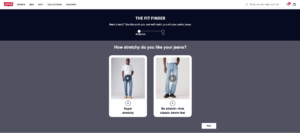
Take Levi’s “Fit Finder” as an example. Rather than simply pushing products, it helps users discover the jeans that best match their body shape and preferences, creating a genuinely useful on-site experience.

That added utility not only improves engagement and trust but also reinforces Levi’s E-E-A-T signals in the eyes of search engines.

Levi’s Fit Finder tool helping users choose the right jeans fit and stretch preference as an example of ecommerce E-E-A-T and user experience optimisation.


Product Page E-E-A-T (PDPs)

Your highest-intent pages. Every E-E-A-T signal you add here directly impacts rankings and conversion rate.

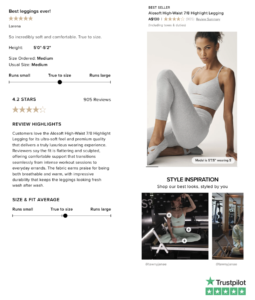
Alo Yoga product page showing customer reviews, fit guidance, review highlights, and ecommerce trust signals.

Experience

Google wants evidence that your brand actually uses, tests, and understands its products. A description copied from a supplier sheet does not qualify. First-hand content does.

  • Add a “Why we made this” or “How this performs” section that explains the product from genuine first-hand knowledge, not marketing copy.
  • Include fit or usage videos showing the product being used in a real context, not just studio shots.
  • Feature UGC (customer photos, tagged social content) directly on the product page, not just in a separate gallery.
  • Show model measurements alongside the size being worn so customers can make accurate comparisons.
  • Include use case context: where the product performs best, when to use it, and what it was designed for.

Expertise

Your product pages should prove that your brand understands the category deeply, not just the individual product.

  • Explain materials, fabric technology, ingredients, or components in specific, accurate detail that only someone with real product knowledge would know.
  • Provide clear use case guidance (“designed for high-intensity training”, “formulated for sensitive skin”, “not suited to machine washing”).
  • Cross-link from the PDP to relevant buying guides, ingredient guides, or educational blog content.
  • Include care, maintenance, or usage instructions that demonstrate real product knowledge.
  • Add “goes well with” or “worn with” cross-links that show category-level styling or compatibility expertise.

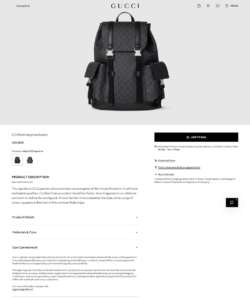
Gucci product page showing delivery details, customer support, product information, and ecommerce trust signals.

Gucci’s product pages are a strong example of sitewide trust and brand credibility signals working together. Elements such as delivery information, customer support access, materials and care details, and sustainability commitments are integrated directly into the purchasing experience. These signals help reinforce transparency, reduce customer uncertainty, and strengthen overall E-E-A-T across the domain.

Authoritativeness

Authority on a product page is built through external validation. Reviews, press mentions, and certifications all signal that third parties recognise your brand and products as credible.

  • Display review star ratings and review counts prominently near the product title, not buried at the bottom of the page.
  • Include a review highlights or summary section that surfaces recurring themes from customer feedback.
  • Enable review filtering so shoppers can find feedback most relevant to their specific concern (fit, durability, skin type, etc.).
  • Feature influencer, ambassador, or expert content with clear attribution on the product page.
  • Reference any press coverage, editorial mentions, or awards directly relevant to the product.

Trustworthiness

Trust signals reduce purchase anxiety. Give shoppers every piece of information they need to buy with confidence before they have to ask for it.

  • Display shipping timelines, return policy, and exchange information near the add-to-cart button, not on a separate policies page.
  • Include material sourcing and manufacturing information with verifiable claims, not vague sustainability statements.
  • Add certifications or trust badges where genuinely applicable (B Corp, GOTS, Leaping Bunny, etc.).
  • Provide a clear size guide and a personalisation tool (“what size am I”) to reduce sizing-related returns.
  • Implement Product schema and Review schema markup so Google can surface structured product data in search results.

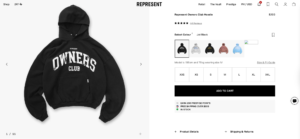
Represent reinforces trustworthiness by placing delivery information, stock visibility, and returns details directly alongside the purchasing area. This reduces friction during the buying journey and gives users the confidence to purchase without needing to search elsewhere for key information.

Represent product page showing reviews, size guide, shipping information, and ecommerce trust signals


Collection Page E-E-A-T (PCPs)

Typically, the highest-traffic organic landing pages are on an ecommerce site. Structurally weak collection pages are among the most common causes of post-December 2025 ranking drops.

Experience

A collection page needs to show that your brand understands the use case behind the category, not just that it stocks products in it.

  • Include a short editorial intro above or within the product grid that contextualises the collection from a real use case perspective.
  • Surface best sellers and staff picks prominently at the top of the grid.
  • Add product image overlay labels indicating new arrivals, bestsellers, back-in-stock items, or new fabric launches.
  • Add an accordion content section below the product grid covering fabric details, fit guidance, and use case context.

Expertise

A collection page that ranks well demonstrates topical authority for its category. It does not just list products.

  • Include browse filters for fabric type, activity, fit, or length with descriptive labels that explain each option.
  • Embed a buying guide or “how to choose” link directly within the product grid.
  • Provide fabric or technology explainer content specific to the products in that collection.
  • Cross-link to related collections using indexable sub-category links, not just filter parameters.

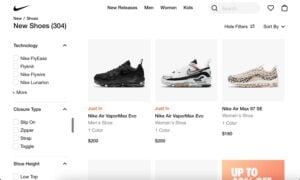
Nike’s collection pages are a strong example of this structure in practice. The collection experience allows users to browse products using detailed category filters such as technology, closure type, and shoe height, while also supporting navigation into more specific sub-categories and related product groupings. This helps users refine products more efficiently while reinforcing topical relevance and category depth for search engines.

Nike collection page with product filters, category navigation, and browse options for ecommerce SEO and user experience.

Authoritativeness

  • Surface aggregate review scores at the collection level, where your platform supports it.
  • Include press or editorial mentions relevant to the collection category.
  • Link to athlete, ambassador, or expert SEO content associated with products in the collection.
  • Reference stockists, retail partners, or wholesale accounts where relevant to reinforce brand legitimacy.

Trustworthiness

  • Ensure all sub-category links are indexable pages, not just filtered URLs that cannot be crawled.
  • Implement a working breadcrumb with BreadcrumbList schema markup for improved internal linking equity.
  • Display a Trustpilot or third-party review platform widget prominently in the footer or page header.
  • Provide visible delivery and returns information accessible directly from the collection page.


Blog Articles and Editorial Content E-E-A-T

Editorial content builds topical authority across your entire domain. Weak blog content suppresses the rankings of your strongest commercial pages.

Experience

Articles that rank in competitive ecommerce categories demonstrate direct, first-hand knowledge of the topic. Generic overviews with no original insight do not perform.

  • Write from genuine product experience, referencing specific items, real tests, or direct comparisons.
  • Include original photography or video that demonstrates real-world usage of the products you are writing about.
  • Reference specific customer feedback or real use cases to ground recommendations in genuine experience.
  • Publish content that answers real questions customers ask, not just content built around keyword volume.

Expertise

Author expertise is one of the clearest signals Google evaluates in editorial content. An uncredited article with no author context is a missed E-E-A-T opportunity on every publish.

  • Assign every article to a named author with a bio that outlines their relevant credentials or experience.
  • Have designers, buyers, product developers, or specialists contribute author-led content in their area of expertise.
  • Implement author schema markup so Google can attribute content to a verified, credible entity.
  • Build topical clusters: every guide should link to relevant collection pages and products, and be linked back to from those pages.
  • Publish in-depth buying guides that answer category questions thoroughly (“best leggings for Pilates vs running”, “how to choose the right moisturiser for your skin type”).

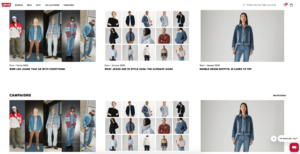
Levi’s is a strong example of this approach in practice. Their editorial content connects style guides, seasonal campaigns, and campaign pages into a broader content ecosystem that supports both user discovery and topical authority. By linking editorial content with product-focused pages, the brand reinforces expertise across multiple search and customer touchpoints.


Authoritativeness

Editorial authority is built through external recognition and consistent topical depth over time. A single well-written article is not enough on its own.

  • Pursue digital PR and editorial coverage that links back to specific blog content, not just your homepage.
  • Internally link published articles to each other to build a coherent topical content cluster.
  • Feature founder, leadership, or brand spokesperson contributions to demonstrate institutional expertise.
  • Reference any industry features, podcasts, or panels your team has been part of within your content.

Trustworthiness

  • Include a published date and last-updated date on every article.
  • Cite sources or reference data when making specific claims around product performance, ingredients, or sustainability.
  • Avoid unsupported superlatives (“the best”, “the only”, “clinically proven”) without verifiable evidence to back them.
  • Implement the FAQ schema on articles that address specific questions to improve eligibility for AI-generated search summaries.
  • Ensure editorial content is internally linked from relevant collections and optimised product pages to pass authority in both directions.


Sitewide E-E-A-T: The Signals That Underpin Everything

Individual page improvements matter. But Google also evaluates E-E-A-T at a domain level. These sitewide signals support every page type above.

Navigation and footer trust signals. Links to sustainability commitments, size guides, repair programmes, and social impact content in your footer carry these signals sitewide. Every page on your domain benefits.

About page and brand story. A well-structured about page with founder information, brand history, and verifiable credentials directly strengthens domain-level trust signals.

Editorial content in main navigation. Surfacing your editorial section in your main navigation signals to Google that you consider it important content. Google crawls navigation as a strong indicator of what a site prioritises.

Consistent contact and support information. A visible, accurate, and functional contact page, live chat, or support system reduces perceived risk and strengthens trust signals across every page on your store.

Schema markup at scale. Organisation schema, Product schema, BreadcrumbList schema, Review schema, and FAQ schema give Google a structured, machine-readable understanding of your brand, products, and content. Each one contributes to how confidently Google surfaces your pages.

E-E-A-T is not a content task. It is a sitewide architecture decision. Brands that apply it to one-page types will see partial gains. Brands that implement it consistently across every template and content type are the ones that win their categories in organic search.


Talk to the Ecommerce SEO Experts

If your store lost non-branded visibility after the December 2025 updates, there’s usually a clear structural reason behind it. At Searchflex, we help premium ecommerce brands uncover the E-E-A-T gaps, content weaknesses, and technical SEO issues that impact organic traffic, rankings, and revenue.

Why brands work with us:

  • Ecommerce-first SEO expertise — We specialise exclusively in SEO for online retailers, with strategies tailored to how ecommerce sites are crawled, evaluated, and ranked.
  • Deep E-E-A-T optimisation — We identify trust, authority, and content quality gaps that often suppress non-branded rankings after major algorithm updates.
  • Category-specific experience — Our work spans fashion SEO, jewellery SEO, tech SEO, home and garden SEO, automotive SEO, education SEO, food and drink SEO, pet SEO, and skincare SEO.
  • Technical + content-led approach — From site architecture and internal linking to topical authority and conversion-focused content, we focus on the areas that drive measurable growth.
  • Focused on commercial impact — We prioritise the SEO improvements most likely to increase qualified traffic, visibility, and revenue — not vanity metrics.

Book a Free Consultation

About the author

Will Padley-Lloyd

Will is an SEO specialist at Searchflex, helping our clients climb the rankings with a sprinkle of strategy and a cap of creative flair. Whether he’s tackling technical audits, crafting keyword-rich content, or geeking out over algorithm updates, Will’s passion for all things SEO shines through. He’s the guy who turns search engine mysteries into measurable results.

Most popular blogs

E-E-A-T In Ecommerce Guide: What You Need To Know

ROAS Is Lying: How Branded Search Cannibalisation Quietly Distorts Ecommerce Growth

How To Use Hreflang Tags For International SEO?

What Is Ecommerce Search Infrastructure? (And Why Most Brands Never Diagnose It)

Is Shopify Bad For SEO? Here’s The Honest Answer

Best Ecommerce Fashion SEO Strategies

Jewellery Ecommerce Trends

11 WooCommerce SEO Fixes (Most Agencies Miss)

Best SEO Strategies For Skincare Cosmetics Brands

Best Digital Marketing Strategy for Education Brands

Ecommerce SEO Best Practices & Costly Mistakes

Should You Prioritise Traditional SEO or GEO for AI?